
Honor Collins
VETERINARY PHYSIOTHERAPY
Treatment Modalities Available
A range of evidence-based physiotherapy techniques are used to support rehabilitation, improve mobility, and maintain musculoskeletal health in both equine and canine patients. Each treatment plan is tailored to the individual animal following a thorough assessment, ensuring that the most appropriate techniques are selected to address the underlying cause of discomfort, dysfunction, or reduced performance.
The therapies offered may be used individually or in combination to support recovery, improve movement, and enhance overall wellbeing.
Massage Therapy
Massage therapy uses controlled pressure and movement to improve comfort, mobility, and overall soft tissue health. When pressure is applied to muscles and connective tissues, small electrical signals are generated within the cells. These signals support tissue repair, enhance cellular energy production, and encourage the development of stronger, more flexible collagen. As a result, muscles are able to move more freely, helping to reduce stiffness and improve overall movement.
Massage also stimulates the release of naturally occurring chemicals such as histamine and bradykinin, which widen blood vessels and improve circulation. Increased blood flow delivers oxygen and essential nutrients to tissues while helping remove metabolic waste products that may contribute to discomfort. As the lymphatic system has no internal pump, massage can also assist the movement of lymphatic fluid, helping to reduce oedema, relieve pressure on surrounding tissues, and support overall tissue health.
In addition to its physical effects, massage has a significant influence on the nervous system. Stimulation of specific nerve fibres can help reduce pain signals travelling to the brain, while also promoting the release of calming and mood-supporting neurotransmitters such as GABA, dopamine, serotonin, and endorphins. At the same time, massage can reduce stress-related hormones such as cortisol, encouraging relaxation and supporting the body’s natural healing processes.
Different massage techniques are used depending on the needs of the individual animal. Techniques applied along the direction of muscle fibres help tissues relax, lengthen, and become more supple. The gentle heat produced during massage increases tissue elasticity, which can improve range of motion and flexibility. Cross-fibre techniques may be used to address small adhesions or areas of scar tissue and encourage the development of healthier collagen. Other techniques, such as compression or tapotement, can influence muscle reflexes to either reduce excessive muscle tone or stimulate underactive muscles, helping to restore balanced and functional movement.

Pulse Electromagnetic Field Therapy (PEMF)
PEMF therapy uses electromagnetic waves to support the body’s natural healing processes. These waves pass through tissues and stimulate cellular activity, helping cells work more efficiently and repair themselves. Improved cellular energy production can support healthier soft tissues, stronger bone formation and better overall mobility. PEMF also helps reduce inflammation by encouraging normal fluid balance within tissues and improving the way cells communicate during the healing process. This can ease discomfort, reduce stiffness and support recovery from both acute injuries and long-term conditions such as arthritis.
PEMF is widely used in fracture patients because it can stimulate osteoblast activity, the cells responsible for forming new bone. This supports stronger, faster bone repair and helps reduce the risk of delayed or non-union fractures. By improving circulation and encouraging healthy bone cell growth, PEMF can help fractures stabilise more effectively and return to normal strength over time.
PEMF is also commonly applied to patients with neurological deficits. The magnetic field can help stimulate nerve cells, support healthier nerve signalling and encourage regeneration in damaged or stressed neurons. This may improve coordination, limb awareness and overall movement quality in animals recovering from neurological injury. It can also help reduce muscle tension and discomfort associated with nerve dysfunction, supporting a smoother and more confident return to normal function.

Class 3b Laser Therapy
Laser is an acronym for Light Amplification by Stimulated Emission of Radiation. It is a form of Photobiomodulation therapy, which occurs when a dose of light energy reaches target tissue and results in decreased inflammation, decreased pain and accelerated healing.
When Class 3B laser light is absorbed by cells, it increases cellular energy production and supports faster, healthier repair of muscles, tendons, ligaments and skin. This boost in activity encourages tissue regeneration, collagen formation and improved mobility. Laser therapy also has strong anti-inflammatory and analgesic effects. It improves local circulation, relaxes blood vessels and helps remove waste products that contribute to swelling and discomfort, while reducing nerve sensitivity to naturally ease pain.
Class 3B laser is also highly effective for supporting wound healing. It stimulates collagen production, improves blood flow and encourages healthy tissue growth, which can speed up recovery from surgical wounds, cuts and chronic non-healing wounds while reducing excessive scar formation. Laser can also be used to relieve trigger points by increasing circulation, reducing muscle tension and calming irritated nerves, helping tight or sensitive muscles return to normal function. Class 3B laser therapy is non-invasive, gentle and well tolerated by most animals. Sessions are quick, comfortable and easily integrated into both acute injury treatment and long-term rehabilitation programmes.

Transcutaneous Electrical Nerve Stimulation (TENS)
TENS uses gentle electrical impulses delivered through the skin to help manage pain and improve comfort. These impulses stimulate sensory nerves, which can block or interrupt pain signals travelling to the brain. This is known as the pain gate theory and is a widely used, non-invasive method of providing pain relief in both human and veterinary patients. TENS also encourages the release of the body’s natural pain-relieving chemicals, including endorphins and serotonin. These chemicals help reduce discomfort, relax the animal and support a calmer, more positive response to movement and handling. By reducing pain sensitivity and promoting relaxation, TENS can help animals move more freely and take part more confidently in their rehabilitation exercises. TENS is commonly used for both acute and chronic pain, including soft tissue injuries, arthritic pain, post-operative discomfort and general musculoskeletal soreness. The treatment is gentle, well tolerated and can be adjusted to suit the sensitivity and needs of each individual animal.

Neuromuscular Electrical Stimulation (NMES)
NMES uses controlled electrical impulses to activate specific muscles, helping them contract in a safe and targeted way. This mimics natural muscle activity and is especially useful when a muscle is weak, injured or not being used properly due to pain, compensation or neurological issues. By stimulating the muscle fibres, NMES helps maintain or rebuild strength, prevents muscle wasting and improves overall muscle function. It also promotes healthier circulation within the muscle, supporting tissue repair and improving the delivery of oxygen and nutrients. This can be particularly beneficial for animals recovering from orthopaedic surgery, nerve injuries or long-term lameness.
NMES can also improve proprioception and neuromuscular control by reinforcing the communication between nerves and muscles. This helps the animal regain confidence in using the affected limb and supports smoother, more coordinated movement as part of a broader rehabilitation programme.
Treatment intensity is tailored to each individual, ensuring the contractions are effective but comfortable. NMES is a safe, well-tolerated therapy that plays an important role in rebuilding strength and restoring normal movement patterns during recovery.

Kinesiology Tape
Kinesiology tape is an elastic therapeutic tape applied to the skin to support muscles and joints while still allowing full movement. Its gentle lifting effect improves circulation and lymphatic flow, helping to reduce swelling, ease pressure on sensitive tissues and support more comfortable movement.
The tape provides constant sensory feedback to the nervous system. This can improve body awareness, reduce pain signals and help animals move with more confidence and control. Depending on how it is applied, kinesiology tape can either encourage muscle activation or help relax overworked areas.
It is commonly used to offload strained tissues, support posture, guide movement patterns and assist rehabilitation exercises. The tape is flexible, comfortable and well tolerated, making it a useful addition to both injury recovery and performance maintenance.

Fascial Edge Tool
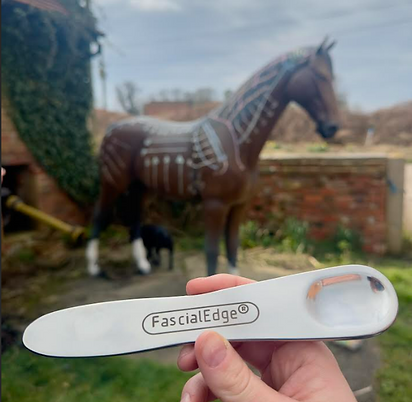
The Fascial Edge tool is a specialised instrument used by clinicians to assess and treat soft tissue restrictions, especially within the fascial network and muscle layers. It allows precise application of pressure along specific tissue lines to locate and address areas of tightness, fibrosis and reduced mobility more effectively than hands alone. The tool’s shape and profiles conform to the body’s anatomy, enabling gentle sweeping strokes or targeted pressure to release tension, improve tissue glide and restore normal movement. It can be used to work superficially on the connective tissue and deeper into dense or fibrotic areas, helping reduce adhesions, improve flexibility and support healthier circulation. Treatment with the Fascial Edge tool also stimulates mechanoreceptors within the fascia and skin, which can help reduce muscle tension and promote reflex relaxation. This makes it useful for myofascial release, trigger point work and improving overall tissue quality as part of a broader rehabilitation plan. The technique is safe, well tolerated and often used alongside massage, stretching and exercise therapy to support pain relief, enhance range of motion and improve functional movement.
Remedial Exercise
Remedial and proprioceptive exercises are targeted movements designed to improve strength, balance, coordination and overall functional mobility. These exercises help retrain the body after injury, surgery or periods of reduced activity by encouraging correct movement patterns and restoring confidence in using the affected limb or area. Proprioceptive exercises focuses on the body’s awareness of position and movement. By challenging balance and stability in a controlled way, these exercises help the nervous system respond more effectively to changes in terrain, speed or direction. This improves coordination, reduces the risk of re-injury and supports safer, more efficient movement.
Strengthening and mobility exercises are tailored to each animal’s needs and may include controlled walking patterns, weight-shifting, core activation, pole work, dynamic mobilisation exercises or myotatic reflexes. These exercises support joint stability, muscle development and healthy posture.
Remedial exercise is an essential part of rehabilitation, helping to maintain progress between sessions and build long-term resilience. When combined with hands-on therapy, it plays a key role in restoring comfort, improving performance and supporting overall wellbeing.
